Series of State-Level Stakeholder Consultations to finalise India’s Agroecology Roadmap
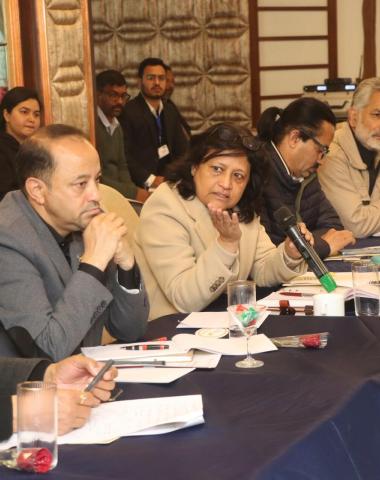
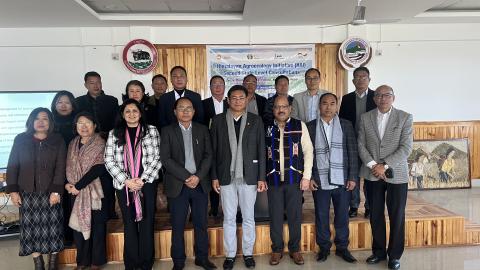
On 6 March 2026, the Himalayan Agroecology Initiative (HAI) convened a state-level engagement in Shillong to refine and finalise the draft of the Agroecology Roadmap for Sustainable Food Systems in the Indian Himalayan Region. This consultation was the latest of a series of engagement held across different states in India, following earlier discussions in Himachal Pradesh, Uttarakhand, and Nagaland in January.
These consultations have played a critical role in shaping the roadmap through inclusive, state-specific inputs. Stakeholders were introduced to the draft roadmap and its seven strategic pillars, which promote a farmer-centric, climate-resilient, and ecologically grounded transition for the Himalayan region. Across states, participants contributed practical insights, validated priorities, and identified context-specific opportunities, ensuring that the roadmap reflects both local realities and shared regional ambitions.
Collectively, the consultations have strengthened the roadmap’s relevance and ownership among key actors. The resulting framework is expected to inform high-level decision-making, support more effective engagement in food policy processes, and accelerate progress toward a more enabling policy environment for agroecology.
The Nagaland consultation underscored the importance of aligning agroecology transitions with the state’s strong foundation in organic and traditional farming systems. Dr. Jai Rana, India Country Representative at Alliance Bioversity & CIAT, highlighted the need to integrate traditional knowledge systems with scientific evidence and policy frameworks.
Dr. James Chawang, Nodal Officer of the Mission Organic Value Chain Development for North-East Region (MOVCDNER), provided an overview of the state’s organic farming landscape. He detailed progress in farmer mobilisation, certification, and market linkages under both state and centrally supported programmes.
Participants emphasised the ecological fragility of the Himalayan region alongside its rich heritage of indigenous knowledge, agrobiodiversity, and traditional practices, many already aligned with agroecological principles. The Nagaland roadmap was widely recognised as comprehensive and well-structured, addressing production systems, value chains, institutional strengthening, and policy convergence.
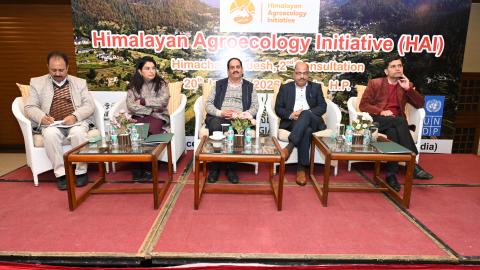
In Himachal Pradesh, participants stressed the urgency of agroecological transitions in light of shrinking landholdings, low agricultural productivity, and the vulnerability of mountain ecosystems.
Dr. Basu Sood, Advisor to the Planning Department, highlighted the importance of balancing food grains and cash crops, drawing lessons from successful chemical-free models, and strengthening long-term ecological stewardship. The consultation helped sharpen the roadmap’s focus on productivity, sustainability, and resilience in hill farming systems.
Discussions in Uttarakhand focused on operationalising the roadmap through targeted interventions and institutional alignment. Shri S.P. Subudhi, IFS, Chairman of the Uttarakhand Biodiversity Board, emphasised the need to identify priority pilot areas, establish a Centre of Excellence on Agroecology, and align HAI recommendations with the state’s Vision 2034.
Chaudhari Ajeet Singh, Vice Chairperson of the Uttarakhand Farmers Commission, noted that while farmers are willing to adopt sustainable practices, they require clearer market pathways and stronger capacity-building support. These insights contributed to strengthening the roadmap’s implementation pathways and market orientation.
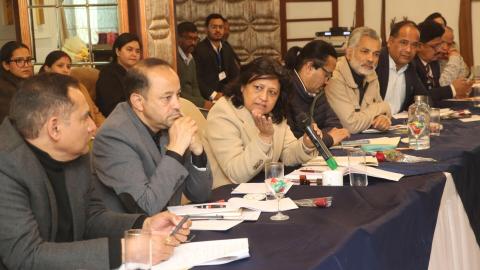
The Meghalaya consultation brought together 22 senior government officials, alongside representatives from research institutions, commissions, and farmers’ organisations. Participants included Dr. Anupam Mishra, Vice Chancellor of Central Agricultural University, Imphal, and Isawanda Laloo, IAS, Secretary of the Department of Agriculture Farmers’ Welfare, Government of Meghalaya.
The consultation reinforced the importance of promoting sustainable and climate-resilient agricultural practices tailored to the region’s unique context. Participants described the process as a valuable platform for shared learning, open dialogue, and collaborative problem-solving. The discussions helped consolidate cross-sectoral perspectives and further refine the roadmap’s strategic direction, ensuring it is both inclusive and actionable.
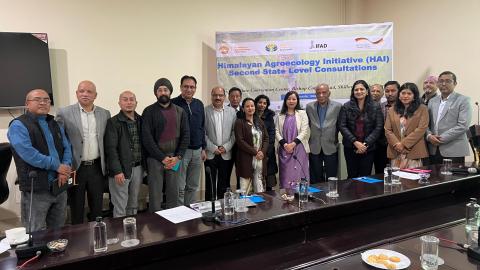
The outcomes of these state-level consultations mark a decisive shift from roadmap development to implementation. By validating priorities and integrating context-specific insights, the process has resulted in a more grounded and actionable framework. Beyond refinement, the consultations have helped define clear next steps, strengthen alignment with policy processes, and identify pathways for scaling. Just as importantly, they have laid the foundation for sustained multi-stakeholder collaboration, highlighting the need for coordination platforms and continuous engagement. Together, these efforts ensure that the Agroecology Roadmap is not only strategic in vision, but also practical in application, positioning it as a catalyst for long-term, systemic transformation of food systems in the Indian Himalayan Region.
The Himalayan Agroecology Initiative (HAI) works with governments and a broad range of stakeholders to accelerate the transition towards sustainable and resilient agroecological food systems in the Himalayan region. The initiative is facilitated by the World Future Council and IFOAM – Organics International, in close collaboration with key national partners: the Alliance of Bioversity International and CIAT and the United Nations Development Programme (UNDP) in India; Local Initiatives for Biodiversity, Research and Development (LI-BIRD) in Nepal; and the Tarayana Foundation in Bhutan. HAI is funded by the German Federal Ministry for Economic Cooperation and Development (BMZ), through its Special Initiative on the Transformation of Agricultural and Food Systems, and by the International Fund for Agricultural Development (IFAD), both serving as core strategic partners.